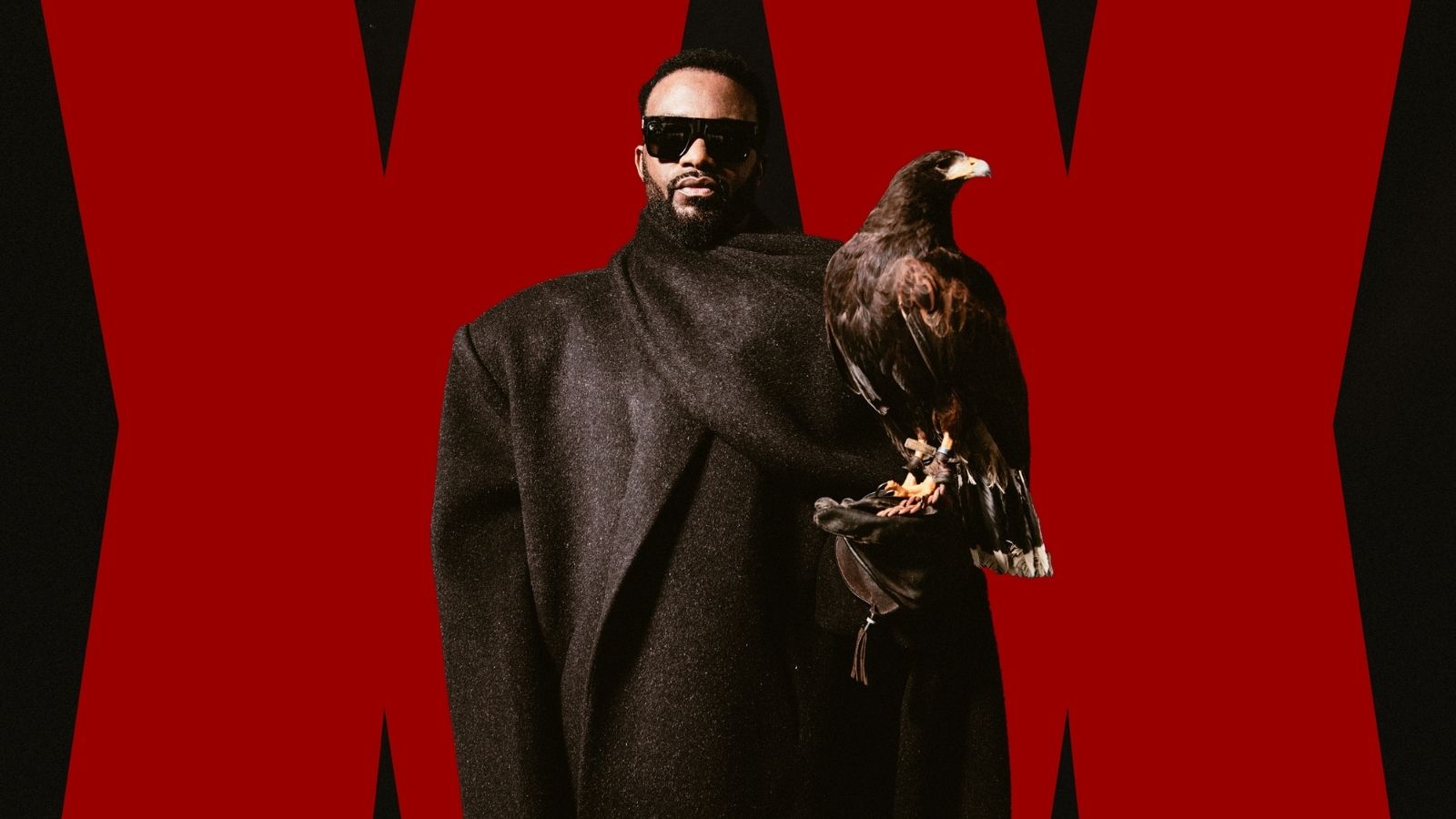
There are artists who ride waves—and then there are those who quietly become the tide. Fally Ipupa has spent two decades doing the latter.
With the release of his new album XX, the Congolese superstar isn’t just marking time—he’s framing a legacy. Dropping via Warner Music France, the project arrives as both a celebration and a statement: a reminder of where he’s been, and a clear signal of where African music continues to go next.
At 19 tracks, XX is expansive but intentional. It moves between worlds—global pop, afrobeats, R&B—while remaining anchored in the emotional, guitar-led core of Congolese rumba. It’s a balance Ipupa has mastered over the years: evolving without erasing, modernising without disconnecting from the source.
The album’s collaborations read like a map of contemporary African and global sound. From Wizkid on the lead track Jam to Angélique Kidjo, DJ Maphorisa, Joé Dwèt Filé, Calema and KeBlack, XX leans into a cross-continental conversation—one that reflects Ipupa’s reach as much as it does his influence.
But beyond the features and production credits, XX feels like a moment of alignment.
It arrives after Formule 7, his Gold-certified project, and folds in the global polish of his Tokoos era with the deeper, more traditional textures that have always defined his artistry. The result is something that feels both familiar and forward-facing—music that understands its history, but isn’t confined by it.
And the numbers tell their own story.
More than three billion global streams. Billions of YouTube views. Tens of millions of followers. Sold-out arenas across Europe and Africa. From Paris La Défense Arena to Wembley, Ipupa has steadily built a career that places African music at the centre—not the margins—of global culture.
Still, the real significance of XX isn’t just scale—it’s timing.
The album arrives alongside two landmark concerts at Stade de France, set to take place in May, marking 20 years in music. It’s a full-circle moment for an artist who has consistently carried Congolese rumba onto bigger and bigger stages, without diluting its identity.
Because that’s always been Ipupa’s quiet power.
He doesn’t just export sound—he carries context with it.
Over the years, his work has played a role in preserving and reintroducing Congolese rumba to new audiences, contributing to its recognition as a UNESCO Intangible Cultural Heritage. And off stage, his involvement with organisations like UNESCO and UNICEF signals an artist aware of his influence beyond music.
XX then is more than an anniversary album.
It’s a bridge—between generations, genres, and geographies. A project that holds both memory and momentum. And in doing so, it reinforces something that has long been clear:
Fally Ipupa isn’t just part of African music’s global rise.
He helped build it.
Ends.