As the world turns its attention to North America for the FIFA World Cup, history is quietly being made.
For the first time, the tournament is being hosted across three countries, the United States, Canada, and Mexico and for the first time, 48 nations will compete for football’s biggest prize, expanding from the traditional 32-team format.
For many, this is simply another World Cup.
For others, particularly those of us on the African continent, it is something far more meaningful.
It is a reminder that dreams can travel further than borders.
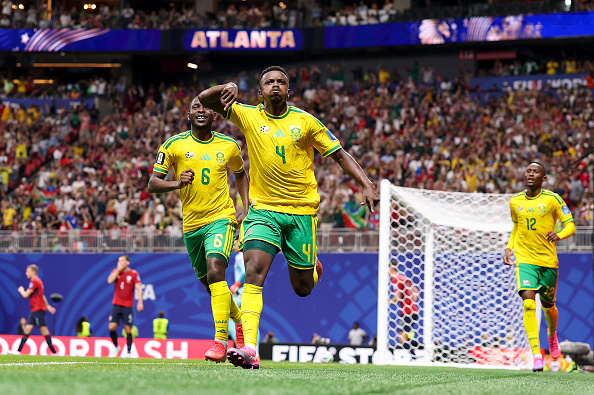
South Africa has not graced a FIFA World Cup since hosting the tournament in 2010. Sixteen years have passed since Bafana Bafana stood on football’s biggest stage. For a generation of young South Africans, those memories exist only in YouTube highlights, stories from parents, and the echoes of vuvuzelas that once united a nation.
Yet despite the odds, South Africans should be proud.
Proud that Bafana Bafana have fought their way back into the conversation. Proud that our flag continues to fly in qualification campaigns. Proud that we still believe.
Football has never been solely about lifting trophies.
Sometimes it is about representation.
Sometimes it is about seeing your colours among the world’s best and knowing that your country belongs there too.
The bookmakers may give South Africa odds of 800/1 to advance deep into the tournament. On paper, those numbers may suggest that success is unlikely.
But football has never been played on paper.
Football is played on dusty fields in Soweto, in township streets in Khayelitsha, on school grounds in Mamelodi, and in villages across the continent where young boys and girls kick a ball barefoot while imagining themselves in front of 80,000 people.
That imagination matters.
This year’s World Cup will feature ten African nations, the largest representation the continent has ever seen at the tournament.
Ten flags.
Ten national anthems.
Ten opportunities to show the world that African football belongs among the elite.
For decades, African teams have carried the burden of proving themselves. Every tournament has come with questions about whether African football can truly compete with Europe or South America.
Yet history tells a different story.
Cameroon shocked the world in 1990.
Senegal stunned defending champions France in 2002.
Ghana came within touching distance of a semi-final in 2010.
Morocco shattered every ceiling in 2022 by becoming the first African nation to reach a World Cup semi-final.
Each generation has pushed the door open a little wider.
Now ten nations can walk through it.
And while only one team can lift the trophy, success for Africa should not be measured solely by silverware.
Success is every child watching from Accra, Lagos, Nairobi, Johannesburg, Dakar, Cairo, Casablanca and Kampala, believing that they too can stand on that stage one day.
Success is changing perceptions.
Success is proving that talent knows no geography.
Success is reminding the world that Africa is not participating to make up the numbers. Africa is participating because it has earned its place.
That is why this World Cup matters.
Not because of the odds.
Not because of predictions.
But because somewhere on the continent, a young footballer is watching and dreaming.
Watching an African team line up against one of the world’s giants.
Watching players who come from streets that look like theirs.
Watching proof that the impossible may not be impossible after all.
The World Cup has always been about more than football.
It is about hope.
It is about identity.
It is about belonging.
And when ten African nations step onto the world’s biggest stage, they carry more than eleven players.
They carry a continent.
And that alone is worth celebrating.