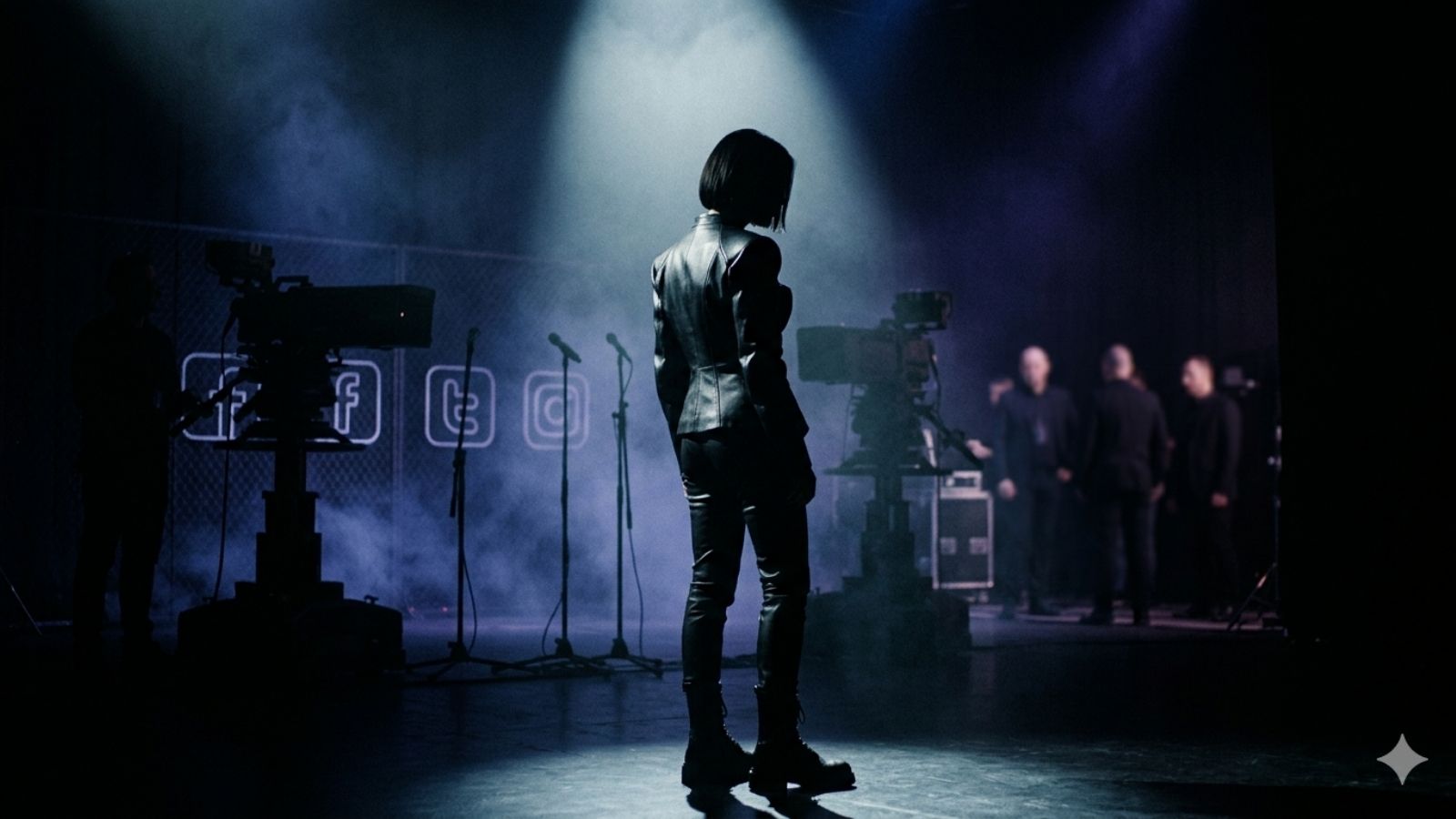
There’s a particular kind of accusation that follows artists the moment they rise too quickly, too smoothly, or too well-packaged: industry plant.
It’s become shorthand for inauthenticity. A way of saying, you didn’t earn this. That your success is engineered, your audience manufactured, your story incomplete.
But beneath the meme, the discourse, and the comment sections, the question is more layered—and more revealing of the industry than the artist.
Because what we call an “industry plant” is often just a misunderstanding of how the industry actually works.
The Myth of the Overnight Artist
The idea of the “industry plant” relies heavily on the myth of the overnight success—the belief that artists should rise organically, from obscurity to recognition, without visible support.
But that version of the story has always been selective.
Behind almost every “self-made” artist is infrastructure: managers, producers, early co-signs, label backing, media strategy. Some are just better at hiding it. Others enter the system earlier, or more quietly.
And when that process becomes visible—when an artist appears too polished, too connected, too ready—the label shifts from promising to planted.
The irony? The same industry that rewards polish often punishes the perception of it.
Who Gets Called a Plant?
The accusation isn’t distributed evenly.
It tends to follow artists who disrupt expectations—especially those who don’t appear to struggle publicly on their way up. Women. Young artists. Artists who cross genres. Artists who understand branding early.
There’s an underlying discomfort with artists who arrive fully formed.
As if ease itself is suspicious.
But what’s often framed as “manufactured” is sometimes just preparation. Access. Or proximity to knowledge that others didn’t have.
And that raises a deeper issue: not whether someone is an “industry plant,” but who gets access to industry infrastructure in the first place.
Access vs. Authenticity
At its core, the “industry plant” conversation is less about deception and more about access.
Who had resources early? Who had networks? Who knew how to navigate the system?
In an industry where connections matter as much as talent, access can accelerate visibility. But acceleration is not the same as fabrication.
An artist can be supported and authentic.
The problem is that we’ve romanticised struggle as proof of legitimacy. We expect artists to earn their place through visible hardship—years of obscurity, rejection, and slow growth.
So when someone bypasses that narrative, it disrupts what we think success is supposed to look like.
The Performance of Authenticity
Ironically, authenticity itself has become something artists are expected to perform.
To appear raw, unpolished, “real”—even when operating within highly structured systems.
Social media has intensified this. Audiences feel closer to artists than ever, which creates an expectation of transparency. But transparency is curated too.
So artists are navigating a double bind:
Be polished, but not too polished.
Be strategic, but not too strategic.
Be authentic—but in a way that feels unscripted.
It’s a narrow line to walk.
The Industry Is the Point
Here’s the part that often gets lost: there is no version of mainstream success that exists outside of the industry.
Labels, platforms, PR machines, algorithms—they are all part of how music travels today.
So calling someone an “industry plant” can sometimes feel like stating the obvious.
Of course the industry is involved. That’s the system.
The more useful question isn’t whether an artist had support, but how that support was used—and whether the work resonates.
Because ultimately, audiences don’t stay for strategy.
They stay for the music.
Rethinking the Narrative
Maybe it’s time to retire the term—or at least rethink what we mean by it.
Instead of using “industry plant” as a catch-all critique, we could be asking more precise questions:
Who gets funding and why?
Who gets visibility and how?
What does fairness look like in an industry built on relationships?
Because the danger of the trope is that it flattens nuance.
It turns complex systems into simple accusations. It reduces artists to narratives we can easily digest—real vs. fake, organic vs. manufactured.
But the truth is more complicated.
And maybe more uncomfortable.
Because if the industry plant isn’t a person—but a system—then the conversation shifts from who is fake to how power actually works.
And that’s a much harder conversation to have.
End.